How to Move Indoor Plants: A Checklist
Plant Moving Advice From Top Quality Mover
A move is exciting, but houseplants make it harder. They are living things, and a relocation strains them. We want yours to arrive healthy and keep growing, so here is a step-by-step checklist for a local or cross-country move, built on what our Top Quality Mover crews have learned over the years.

Preparation Before the Move: Get Your Plants Ready
Start getting plants ready weeks before packing day. Prepared plants travel better and are less prone to damage or shock.
- Take stock (2-4 weeks out): Note each plant’s size, type, and light and water needs. Too big or delicate to travel? Give it away, sell it or keep a cutting. Moving out of state or abroad? Check the plant rules there first; they exist to keep out pests and invasive species.
- Prune and debug (1-2 weeks out): Cut dead leaves and overgrown stems so plants pack smaller. Treat aphids or spider mites with insecticidal soap or a natural remedy. Chemical residue hurts plants in a closed box, so skip sprays near moving day.
- Switch pots if needed (1-2 weeks out): Swap cracked or heavy ceramic pots for light plastic ones with fresh, well-draining soil, which feeds the plant and spills less.
- Ease off water and food (1 week out): Let the soil dry slightly by watering less, so pots get lighter and mold or root rot is less likely. Skip fertilizer for at least two weeks before the move to avoid fragile new growth.
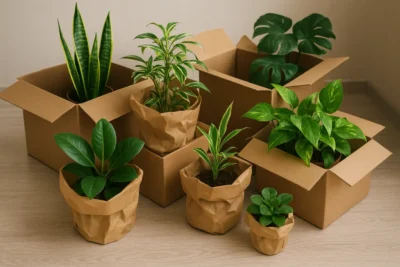
- Get supplies ready (1 week out): Boxes taller than your plants, packing paper, bubble wrap, plastic bags for soil, stakes and labels. Booking Top Quality Mover? Ask us about plant crates.

Packing Your Plants: Secure and Protect
Most plant damage happens during packing, so go slow. Plants should be the last thing you box, on moving day if possible.
- Wrap them (night before or moving day): Tie tall plants loosely with soft twine, bag the pot base to hold soil, and pad delicate leaves with bubble wrap or newspaper, leaving room for air.
- Boxing them: Steady small plants with dividers or balled-up paper; put big ones in open-top boxes or moving blankets. Punch air holes if a box stays shut more than a few hours, and mark it “Fragile: Live Plants” with an arrow pointing up.
- Tricky plants: Sleeve succulents and cacti in foam or cardboard to save the spines. Unhook hanging plants and pack them flat or in a carrier. Drain terrariums and other aquatic plants, then secure the lids.
- Heat and cold: Blanket the boxes in extreme weather. Never use the car trunk, where it heats up and chills fast.

During the Move: Transport with Care
Plants feel the trip too, so keep them comfortable.
- Last on the truck: Load plants last so they come off first and spend less time inside.
- Pick the right ride: Short move? Use your own car, where you control the temperature. Long haul? A climate-controlled truck if possible; the Top Quality Mover fleet has options for plants and other temperature-sensitive items.
- Watch the conditions: No direct sun, heaters or vents. Stop now and then on a drive to check and mist them. Airlines mostly refuse plants in checked bags: carry them on if allowed, or use a plant shipper.
- No nights in the car: On a multi-day trip, bring plants indoors overnight, away from cold or heat.

After the Move: Help Your Plants Settle In
After you arrive, act fast and your plants will bounce back sooner.
- Unbox right away: Unwrap plants gently as soon as you arrive, check for damage and set them in a shaded spot with no drafts.
- Water and rest (first 24-48 hours): Water well but don’t drown them, mist the leaves, and keep direct sun away for a few days to avoid shock.
- Pick their spots (1-2 days after): Give each plant the light it had before, turning pots as it adjusts.
- Signs of stress (first few weeks): Yellow or wilting leaves mean a plant needs help, such as a humidity tray for tropicals. Still struggling? Ask a local nursery.
- Back to normal: After a week or two, resume your usual watering and feeding; a mild fertilizer helps recovery.
Follow these steps and your plants should settle in and thrive.
Top Quality Mover can move your whole household, plants included, and treat every pot with care. Call or write for a free quote.
Download Checklist for Moving with Indoor Plants